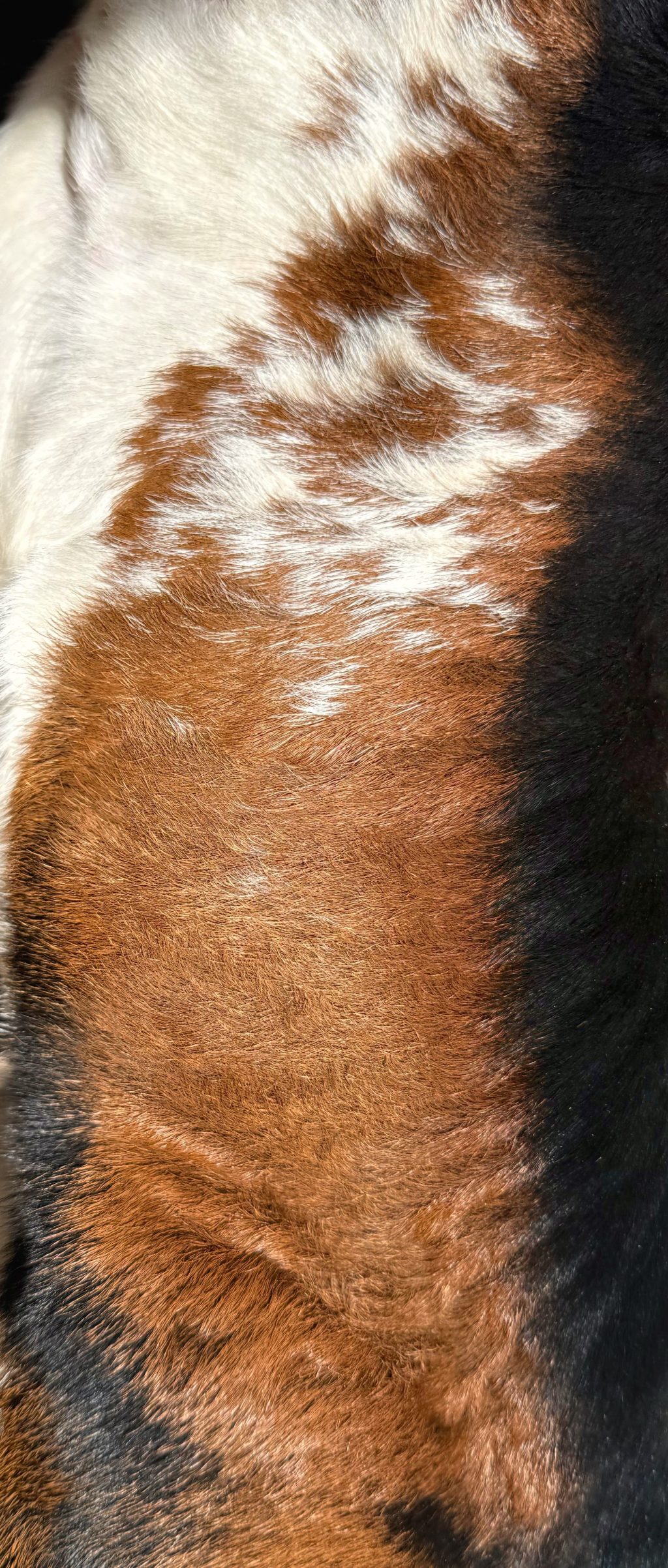
Damara sheep express an extraordinary array of colours and patterns, and many have already been studied, identified, named – even had their heritability laid out. But there’s no standardised naming system here in Australia — no full picture, historical or current, of what colours and patterns actually exist in our shared flocks. This is in conjunction with the fact that Damara can throw colour curveballs!
This project isn’t about reinventing anything; it’s about using the existing published studies and frameworks to see what we’ve actually got … and with some unanswered questions remaining, maybe even discover something new, or fill in a piece of the puzzle. We’re not genetic experts, and not looking to remake the wheel – rather we will be aiming to lean into and apply the documented research from South African flocks to see how – or if – the variation shows up in our wider joint Australian flock.
Why?
Firstly, to create a real, ever growing record of the amazing range and expression of Australian Damara coat colours. Damara colour and pattern variations is one of the most interesting physical features of the breed, and we want to enjoy and celebrate it! Many Damara are sold young, before their adult colour has come through. That means we can often miss seeing what those coats become, and what we call black as a lamb may in fact be something else entirely at maturity. As such, we can miss the full spectrum from the start, and perhaps not even know what is actually out there today.
Secondly, we can delve a little more into understanding the genetic side: how are these colours inherited? Which seem dominant, how many genes might be involved, and how do they combine or mask each other to produce what we’re seeing? Most of this hard work has also already been done, so we really get to sit back and observe, note how it plays out, to try and figure out what we are seeing and to make assumptions and predictions. We are sure there will be surprises along the way! By means of photos, historical colour mapping, some genetic testing (looking at you dominant black!) and scratching of heads we can build a map of the Australian colour genetic patterns.
Thirdly, by actually understanding what the Australian flock is comprised of, we are going to get an idea if we are quietly losing recessive colours to the more dominant forms. Damara genetics are multilevel, with different interacting genes at play – it would be easy to have some drop out of the pool forever, if it has not already happened. Some colours that once turned up no longer seem to express in the offspring. By understanding what is represented and the inheritance mechanisms in our flocks, we have the opportunity to catch any disappearing variants before they slip through the net forever. If we find a colour expression that’s rare or fading, we can work to give it a chance to continue in our population – not to favour it, but so that it isn’t lost by accident. Because no single flock can do this alone, we’d love to work alongside other breeders and owners – every Damara counts. This is perhaps a hopeful objective – but one that could prove to be worthwhile.
At the end of the day, it is a citizen science project more than anything: curious, hands-on and grounded – a way in which any Damara owner can be involved as we explore colour, pattern and coats. We will work on setting up some basic site functionality first, then start trying to identify what’s in our flock to get things rolling … absolutely everyone is welcome to get involved, to include photos of their Damara, to identify those already in the project or even decipher inheritance trees! If this sounds like something you would enjoy, we hope to hear from you soon.


Leave a comment